BESS Practices: Managing Fire Risks in California Battery Energy Storage Systems
January 26, 2026
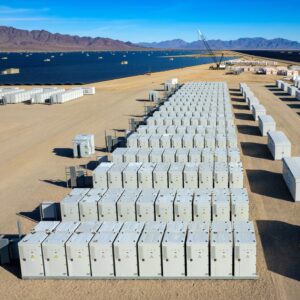
California has recently adopted a host of battery energy storage system (BESS) fire safety regulations to address concerns raised by incidents like the January 2025 fire at the Moss Landing facility in Monterey County. The following primer summarizes these recent regulatory developments and specifies best practices for integrating them into the local permitting process.
California Senate Bill 283
California Senate Bill (SB) 283 took effect on January 1, 2026. Introduced in response to the Moss Landing fire, SB 283 features the following requirements:
- Early Consultation with Fire Officials: SB 283 requires battery storage developers to consult with local fire authorities at least 30 days before applying for permits for a proposed facility. The consultation must address facility design, potential risks, and emergency response plans, including those required by SB 38 (discussed below). Importantly, however, SB 283 does not require local approval of the plans.
- Pre-Operational Inspection: Local fire officials must inspect BESS facilities before they become operational, a practice already required in many jurisdictions.
- Non-Combustible Buildings: SB 283 instructs the Office of the California State Fire Marshall to consider restricting BESS to “dedicated-use noncombustible buildings or installations,” which is already standard practice for most utility-scale developers.
California Senate Bill 38
Enacted in October 2023, California SB 38 mandates specific safety measures for BESS facilities. Key elements of SB 38 include:
- Emergency Response and Action Plans: Each BESS facility must develop comprehensive emergency response and action plans covering the premises. These plans must include procedures for responding to potential fire, explosion, and chemical hazards, as well as evacuation protocols and communication strategies for coordinating with first responders.
- Coordination with Local Agencies: Facility owners or operators must coordinate with local emergency management agencies when developing these plans. The objective is to ensure a cohesive and effective response strategy in the event of an emergency.
- Plan Submission: The emergency response and action plans must be submitted to the county and, if applicable, the city where the facility is located. This submission facilitates oversight and ensures that local authorities are informed and prepared. Like SB 283, SB 38 does not require local approval of the plans.
California Public Utilities Commission General Order 167-C
In March 2025, the California Public Utilities Commission (CPUC) approved modifications to General Order (GO) 167, resulting in GO 167-C, to establish new maintenance and operation standards for BESS facilities. Key elements of GO 167-C include:
- Emergency Response and Action Plans: BESS owners must develop and to the CPUC SB 38-compliant emergency response and action plans in coordination with local authorities.
- Safety-Related Incident Reporting: Operators must report safety-related incidents, such as fires or system failures, to the CPUC within 24 hours of occurrence, followed by a detailed, written report within five business days. This requirement aims to enhance transparency and facilitate prompt corrective actions.
- Maintenance and Operation Standards: GO 167-C establishes specific standards for the maintenance and operation of BESS facilities to ensure their safe and reliable performance.
National Fire Protection Association 855
The Office of the California State Fire Marshal adopted and incorporated into the California Fire Code the most recent National Fire Protection Association (NFPA) 855 standard in March 2025. It took effect on January 1, 2026.
NFPA 855, titled Standard for the Installation of Stationary Energy Storage Systems, provides comprehensive guidelines for the design, installation, and operation of BESS to mitigate fire and explosion risks. Key elements of NFPA 855 include:
- Location and Separation Requirements: NFPA 855 specifies criteria for the placement of BESS, including separation distances from buildings, property lines, and other equipment, to minimize fire spread.
- Fire Detection and Suppression Systems: NFPA 855 mandates the inclusion of fire detection and suppression systems tailored to the specific risks associated with the type of batteries used.
- Emergency Planning: NFPA 855 emphasizes the need for comprehensive emergency planning, including coordination with local emergency services and the development of emergency response plans.
UL 9540 Certification
UL Solutions standard 9540 (UL 9540) is the primary certification standard for battery energy storage systems in the United States. The standard addresses both fire safety and overall system performance. Although UL 9540 is not a regulation per se, California has given it regulatory effect because it is included in NFPA 855, which is part of the California Fire Code as of January 1, 2026.
Key components include:
- Thermal Runaway Risk Assessment: UL 9540 certification requires BESS manufacturers to evaluate how a specific battery system responds to failure events and assess the risk of thermal runaway.
- System-Level Evaluation: UL 9540 certifies the safety of the entire energy storage system—not just the individual battery components—by assessing the interaction between batteries, inverters, thermal management, software controls, and fire mitigation systems.
- Compatibility with UL 1973 and UL 1741: To achieve UL 9540 certification, systems must use batteries certified under UL 1973 (batteries for use in stationary applications) and inverters compliant with UL 1741 (inverters and converters for distributed generation).
Implications
Developers must comply with the state standards outlined above regardless of the local jurisdiction a BESS project is located in. But it is during the environmental impact review and permitting process at the local level when BESS projects face the greatest scrutiny – and therefore permitting risk – over fire concerns. To reduce that risk, developers should integrate the above state standards into the local permitting process as follows:
- Prepare Comprehensive Emergency Response and Action Plans
Well in advance of application submittal, develop robust emergency response and action plans in accordance with the regulations summarized above and any local requirements. Once prepared, these plans should be relatively fungible across projects, provided they are kept current with regulatory developments and adapted as needed for each project.
- Prepare a BESS Fire Risk and Mitigation Report
Well in advance of application submittal, develop a BESS fire risk and mitigation report that reads as a single-subject CEQA analysis and includes (i) a BESS facility project description demonstrating compliance with state building and fire code design standards; (ii) a detailed discussion of the project’s potential BESS fire risks that discusses (and, if possible, distinguishes) prior BESS fire case studies; (iii) a discussion of how the state standards referenced above address these risks; and (iv) how mitigation measures requiring compliance with each of the state standards (in conjunction with other applicable best practices) will mitigate fire impact risks to a less-than-significant level.
- Early Local Fire Engagement and Consultation
Initiate early consultation with local fire authorities at least 30 days prior to submitting applications for local land use permits. Provide copies of emergency risk and action plans for review in advance of consultation. Memorialize the consultation per SB 283 requirements.
- Land Use Permit Application
Include emergency response and action plans, BESS fire risk and mitigation report, and local fire consultation notes in local land use permit application package. Work with local agency staff to ensure these materials are carried forward into the BESS project’s CEQA analysis.
Conclusion
As California continues to expand its BESS capacity to support ambitious clean energy goals, regulatory compliance and proactive fire risk management are becoming essential components of successful project development. The evolving framework—anchored by SB 38, SB 283, GO 167-C, NFPA 855, and UL 9540—reflects the state’s emphasis on safety, transparency, and coordination among developers, regulators, and local emergency response agencies.
For developers and operators, early engagement with fire authorities, comprehensive emergency planning, and integration of state and national standards into the permitting process are no longer optional best practices—they are critical to securing project approvals and maintaining community trust. By implementing these measures, the industry can continue to advance California’s clean energy transition while upholding the highest standards of safety and environmental stewardship.
Bell Kearns specializes in advising on the review and entitlement of large-scale energy projects. If you have any questions regarding this article, please feel free to contact the author at alexa@bell-kearns.com.